
丘比特的圈套
坝上乌兰布统露营好去处,拥抱草浪落日与漫天星空_我的网站

A | 坝上乌兰布统露营好去处,拥抱草浪落日与漫天星空 在坝上草原的旅行清单里,乌兰布统一直是绕不开的名字。
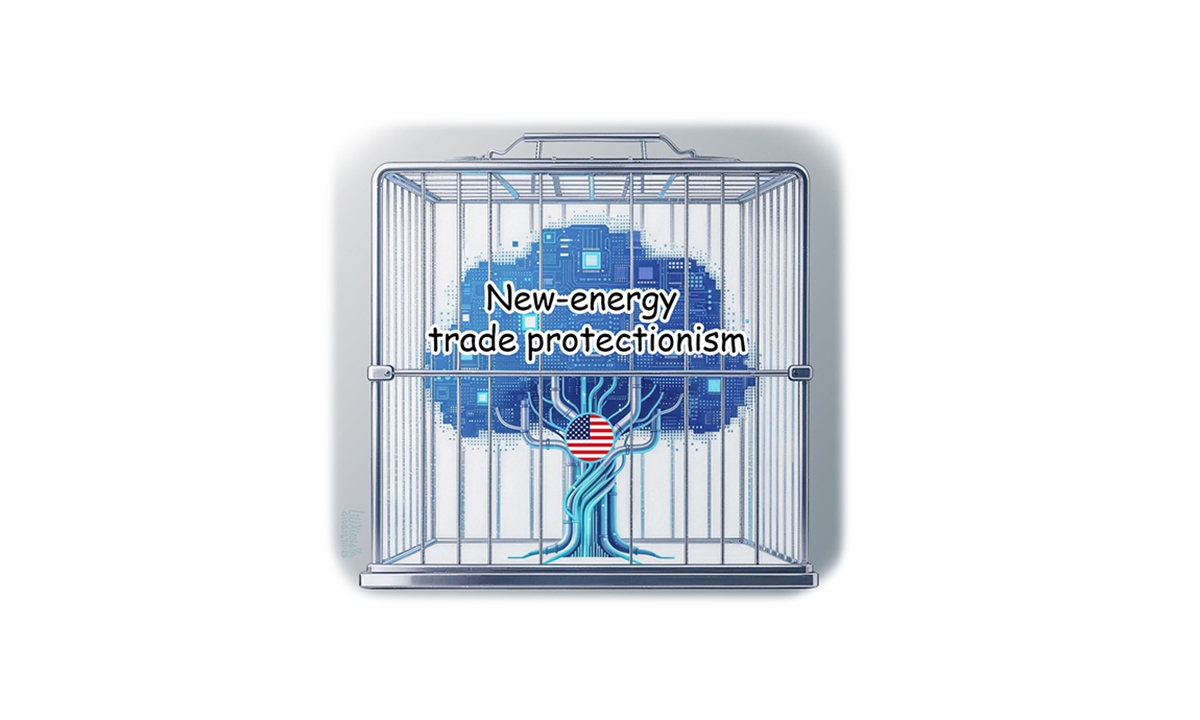
Recent media reports have questioned whether a natural gas plant built to power an Amazon data center project in Texas could become the largest climate polluter in the US. The controversy, whatever the eventual outcome, offers a reality check for America's artificial intelligence (AI) drive.
It exposes a growing contradiction: The US is racing to expand its AI capabilities, yet its protectionist trade policies are making it harder and more costly to access some of the clean-energy technologies needed to sustain that expansion. This raises a broader question: Can an energy-intensive AI race afford the costs of renewable energy protectionism?
The US is entering a new era of rising electricity demand. Data centers, the backbone of the AI economy, are emerging as one of the fastest-growing sources of power consumption. Much of that demand is still being met by fossil fuels: The International Energy Agency reports that natural gas supplies more than 40 percent of the electricity used by data centers in the US, making it their largest source of power.
So, it's not surprising that the expansion of data centers has raised concerns over their environmental impact and the pressure they could place on local power systems and electricity bills. A Gallup survey conducted in March found that seven in 10 Americans opposed the construction of AI data centers in their local area, including 48 percent who strongly opposed such projects.
The findings point to a broader challenge for the US: The race to develop AI is increasingly becoming a race to meet growing energy needs. Addressing this challenge will require more than advances in computing technology; it will also depend on an energy system capable of delivering large amounts of reliable, affordable and cleaner power. That, in turn, will require faster development and broader deployment of clean-energy technologies, from solar power to energy storage.
Yet in the clean-energy sector, the US has increasingly relied on protectionist trade measures that limit access to cost-competitive products from global markets. The country has placed greater emphasis on expanding domestic manufacturing capacity, but rebuilding entire clean-energy supply chains at home is a costly and time-consuming process. Even if expanded domestic production is achieved, it is likely to come at a higher cost, making the deployment of renewable technologies more expensive and potentially slower.
The solar industry offers a clear illustration of this policy direction. The US has continued to expand trade barriers in the sector. Reuters reported that the US government announced on Thursday a series of price floors and a 15 percent tariff on products made from polysilicon, a raw material used in solar panels.
The challenge lies in the limited scale of the US polysilicon industry. Reuters reported that the country has two polysilicon factories. Against this backdrop, relying on domestic polysilicon production while restricting access to imports runs counter to the goal of expanding solar power in the US. The country risks creating barriers that ultimately constrain its own access to the global supply chains needed for growth.
The pressing issue for the US is the speed at which new power demand is emerging. The expansion of data centers is creating electricity needs that cannot wait for domestic clean-energy capacity to develop gradually. Global supply chains can provide the scale and speed required in the near term. By narrowing access to these sources, the US risks turning clean-energy policy into a drag on the infrastructure needed for its AI race.
The US has placed AI high on its economic and technological agenda. The outcome of this race will matter greatly, as financial markets are also watching whether America can turn its AI efforts into commercial success.
This leaves the US with a difficult choice: Can it afford the cost of clean-energy protectionism while racing to build AI infrastructure? The answer may be no. Trade barriers that limit access to competitive renewable technologies could ultimately become a constraint on the AI expansion that Washington is seeking to accelerate.
The author is a reporter with the Global Times. [email protected]
。但很多人不知道,除了驱车穿越起伏的草甸、在影视基地打卡同款机位,这里还有一种更松弛的打开方式——把帐篷扎进草原深处,等一场落日把天边染成橘粉色,再枕着漫天星光入睡。

B | 这次带娃在甘丹驼城游牧文化景区里,意外发现的小矮人精灵牧场,恰好满足了我对草原露营的全部想象。 把家搬进草浪里:从一顶白色帐篷开始的午后 从景区入口沿着缓坡往里走,视线会先被一片开阔的草地吸引。

C | 小矮人精灵牧场的露营区就散落在这片草浪之间,不是那种规整划一的营地,而是让白色帐篷、露营桌椅和散养的动物们自然地“长”在草地上。

D | 我们抵达时正是下午三点多,阳光把草尖镀成金色,几头小矮马在帐篷不远处低头吃草,偶尔甩甩尾巴,完全不介意旁边支起的天幕和正在煮茶的炉子。

E | 这种露营体验和城市近郊的营地很不一样,少了些刻意营造的精致感,多了几分草原自带的旷野气息。孩子们在草地上追着蝴蝶跑,大人则瘫在露营椅里,看云影从远处的山丘上缓缓滑过。帐篷里备好了寝具和照明设备,不需要自己动手搭建,真正做到了“拎包入住”。如果时间充裕,建议在这里待到傍晚——当太阳开始往西沉,整个牧场会被笼罩在一种柔和的暖光里,那是拍照和发呆都合适的时刻。 住进童话的坐标:霍比特小屋与巨型艺术装置 如果说露营区是草原的“松弛面”,那牧场深处的霍比特小屋集群就是它的“童话面”。圆滚滚的木门、矮矮的窗棂、铺满花草的屋顶,一栋栋小屋错落分布在草坡上,像是从绘本里直接搬出来的场景。小屋门口有小矮人NPC驻守,穿着毛毡斗篷、戴着尖顶帽,见到小朋友会主动挥手打招呼,还会蹲下来和孩子们平视着聊天。

F | 这种不刻意的互动方式,比单纯的拍照打卡更有温度,孩子甚至会主动拉着“小矮人”的手,问他们是不是真的住在小屋里。 顺着小屋间的步道继续走,会陆续遇到几个大型艺术装置:微笑吊床悬在两棵树之间,人躺上去会随着微风轻轻晃动;巨大的亲吻爱心立在草坡上,是情侣和家庭合影的热门点位;还有白色相框、白房子等装置,每一处都留出了足够的构图空间。

G | 这些装置和草原环境融合得恰到好处,不会觉得突兀,反而成了点缀在绿野上的视觉锚点。建议穿浅色系衣服来拍照,和白色装置、绿色草甸的搭配更出片。 萌宠零距离:一场关于信任的互动课 牧场里很让孩子走不动道的,当属萌宠乐园。

H | 这里的小动物种类不少:小矮马、小矮牛、小矮驴、小矮羊,还有梅花鹿、羊驼、马鹿、小骆驼,甚至还有一头草原狼(被安全隔离在围栏内)。和普通动物园不同,这里的动物大多可以零距离接触——工作人员会提供专门的饲料,孩子们可以亲手投喂小羊,抚摸羊驼柔软的毛发,或者蹲下来和小矮马对视。

I | 让我印象很深的是,牧场在互动环节的设计上很注意分寸感。每种动物都有独立的活动区域,不会出现拥挤或争抢食物的场面;工作人员会在一旁引导孩子用正确的方式接近动物,比如先伸出手背让动物闻一闻,再慢慢抚摸。这种体验对孩子来说,不只是一次“看动物”的行程,更是一堂关于尊重与信任的自然课。我家小朋友在喂小矮羊时,发现羊群会跟着他手里的饲料桶走,兴奋得来回跑了好几趟,很后干脆坐在草地上,让几只小羊围着他蹭来蹭去。 从滑草到Cosplay:草原上的N种玩法 除了静态的露营和萌宠互动,牧场里还有不少能让孩子充分放电的动态项目。

J | 滑草区从草坡顶端延伸下来,坐在滑草板上俯冲而下,风从耳边呼啸而过,大人小孩都能玩得尽兴。

K | 无动力游乐区则更考验孩子的协调性——摇床秋千、龙蛇秋千、连排秋千、高秋千一字排开,还有滑梯和攀爬网,几个孩子凑在一起就能自发组织一场“闯关比赛”。 如果喜欢角色扮演,可以在霍比特小屋附近的换装区租一套服饰,从小精灵、小矮人到草原风格的装扮都有。换上衣服后再走进小屋集群,童话氛围感会直接拉满,拍照的素材也能多出好几组。牧场里偶尔还会有Cosplay快闪活动,高颜值的Coser会穿着经典角色的服装穿行在景区里,遇到他们不妨合个影,算是旅程中的小惊喜。 关于行程安排,我的建议是留出半天到一天的时间给牧场。

L | 上午抵达后可以先玩萌宠乐园和滑草,中午在露营区休息用餐,下午趁着光线柔和去霍比特小屋和艺术装置区拍照,傍晚回到露营区等落日,晚上如果天气好,还能看到草原上格外清晰的星空。

M | 如果时间充裕,可以搭配甘丹驼城游牧文化景区的其他项目一起游玩,让整趟草原之旅的内容更丰富。

N | 离开的时候,回头看了一眼暮色中的牧场,白色帐篷的灯光次第亮起,像散落在草地上的星星。孩子们在车上还在讨论明天要再来喂哪只小羊,而我已经开始期待,下一次在草原的星空下醒来。 声明:本文内容基于公开资料整理,不构成任何投资或消费建议。

o | 产品性能参数请以厂家官方说明为准。返回,查看更多。

p |
Current article:http://hqp3ii.qixicuorenchouzuan.buzz/5dc/pj3m.html
Published on:00:00:00